What if fusion is a control problem?
We study whether phase-synchronized fuel injection can sustain fusion burn waves without full-volume confinement.
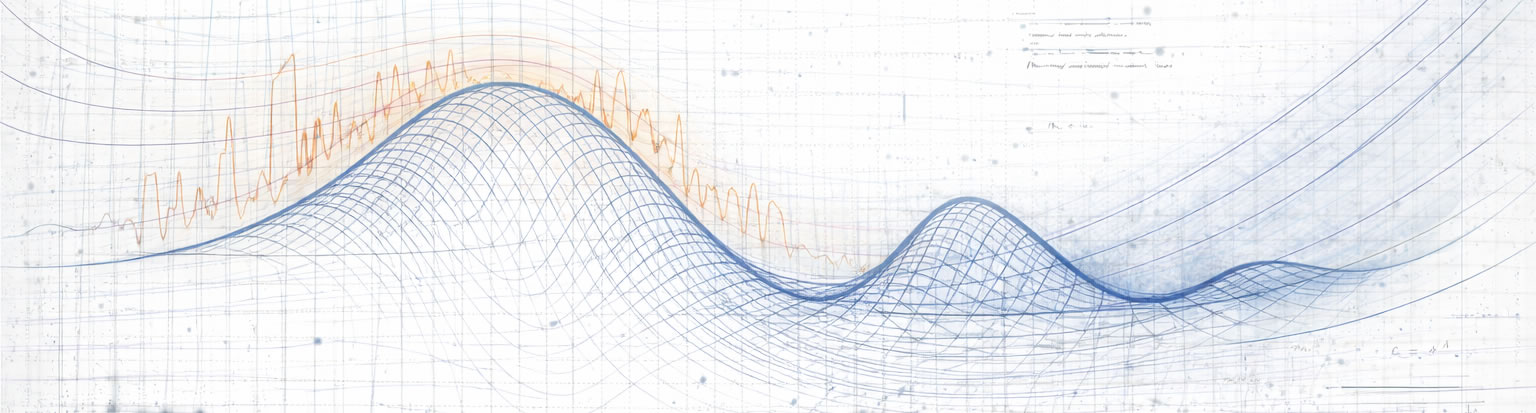
Advanced R&D in fusion control systems
and plasma dynamics
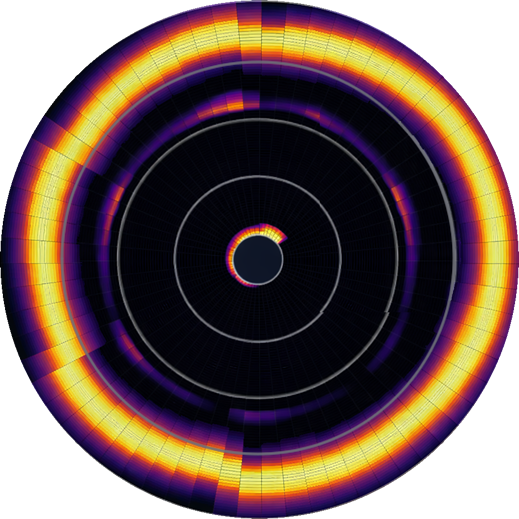
BOUT++ magnetohydrodynamic simulation - temperature field evolution
A Control-First Architecture
Wake-Aligned Fuel Injection (WAFI) reframes fusion as a propagating burn-wave control problem rather than a full-volume confinement problem.
Instead of attempting to hold an entire plasma volume at ignition conditions, we synchronize fuel delivery with the natural burn front, injecting into the thermal wake where ignition conditions are already established.
This approach seeks to sustain fusion through phase-synchronized control rather than brute-force confinement.
Why Fusion Keeps Failing
For decades, fusion research has focused on achieving ever-higher confinement, stronger fields, and larger machines.
This approach treats fusion as a static equilibrium problem.
But plasma is not static. Burn is not uniform. And energy does not propagate evenly.
Fusion is a dynamic system with unstable wavefronts, phase-sensitive reactions, and nonlinear feedback.
We believe the failure mode is not physics. It’s control.
Built on simulation, not slides
Our work begins where fusion actually fails: in time, phase, and control.
We build numerical models and multi-dimensional simulations to study how burn waves form, propagate, destabilize, and extinguish, and how phase-synchronized injection can change that outcome.
These simulations are not visualisations.
They are control experiments.
From this foundation, we design diagnostics, feedback architectures, and experimental systems to close the loop between physics and control.
Simulation is how this work starts.
Hardware is where it goes.

In run BOUT++ simulation - temperature field streamed to telemetry dashboard
Chatwood Labs
Control-first fusion architecture. Patent filed. Code running. Physics converging.
Modelling
& Simulation
Multi-dimensional physics models for burn-wave formation, stability, and failure.

Control & Fuelling
Architectures
Phase-synchronized injection systems for wave-driven fusion control.

Experimental
System Design
Diagnostics, feedback loops, and test hardware to close the simulation–reality gap.
Fusion is a control problem
We’re solving it